Unsubscribe
View in your browser

English | Español | French | Arabic

February, 2025

In this issue, what Loss and Damage from climate change looks like when communities define it. How five years of Community-led Research are shifting power and narratives. And what comes next with Feminist Participatory Action Research (FPAR).

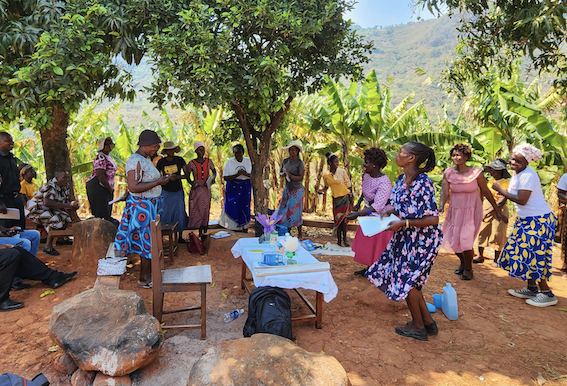
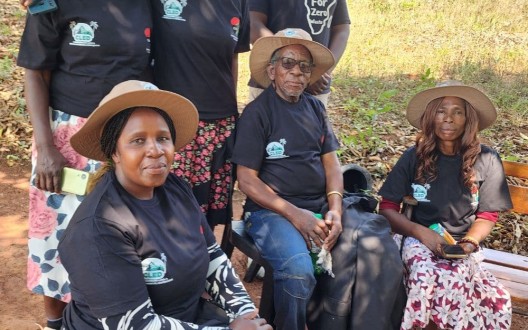
Chimanimani Land and Environment Defenders (Zimbabwe) during their research journeys as part of the Loss and Damage CLR project.
Community-led Research Hub:
Knowledge Is Power – And Power Is Shifting

In 2020, ESCR-Net launched the Community-Led Research Initiative (CLR) within the Monitoring Working Group to center communities’ knowledge and lived experiences in shaping the evidence on economic, social, and cultural rights—and to affirm states’ responsibility to use community data and respond to realities on the ground. As this work deepened, members called for moving beyond “monitoring” toward a stronger, movement-rooted approach to research.

Communities are not “sources.” They are knowledge producers, strategists, and authors of their own futures. When communities define their own realities and generate their own evidence, power begins to shift.

Today, the Monitoring Working Group has become the Community-Led Research Hub (CLR Hub) —  not simply a new name, but a political repositioning. Within the CLR Hub, movements define their research agenda and political strategy, receiving resources to carry them forward. The CLR Hub strengthens research by and for movements, connects struggles across regions, builds shared methodologies, and deepens collective learning through initiatives such as the CLR School (Escuelita).

As Oscar Pineda, Strategic Research Coordinator at PODER and member of the CLR Hub Advisory Group, reflects, 

“With more ethical, critical, and holistic approaches, communities and activists are building bridges for long-term socio-political transformation—while defending our rights and our territories.”

 
From evidence to action: over five years of Community-led Research
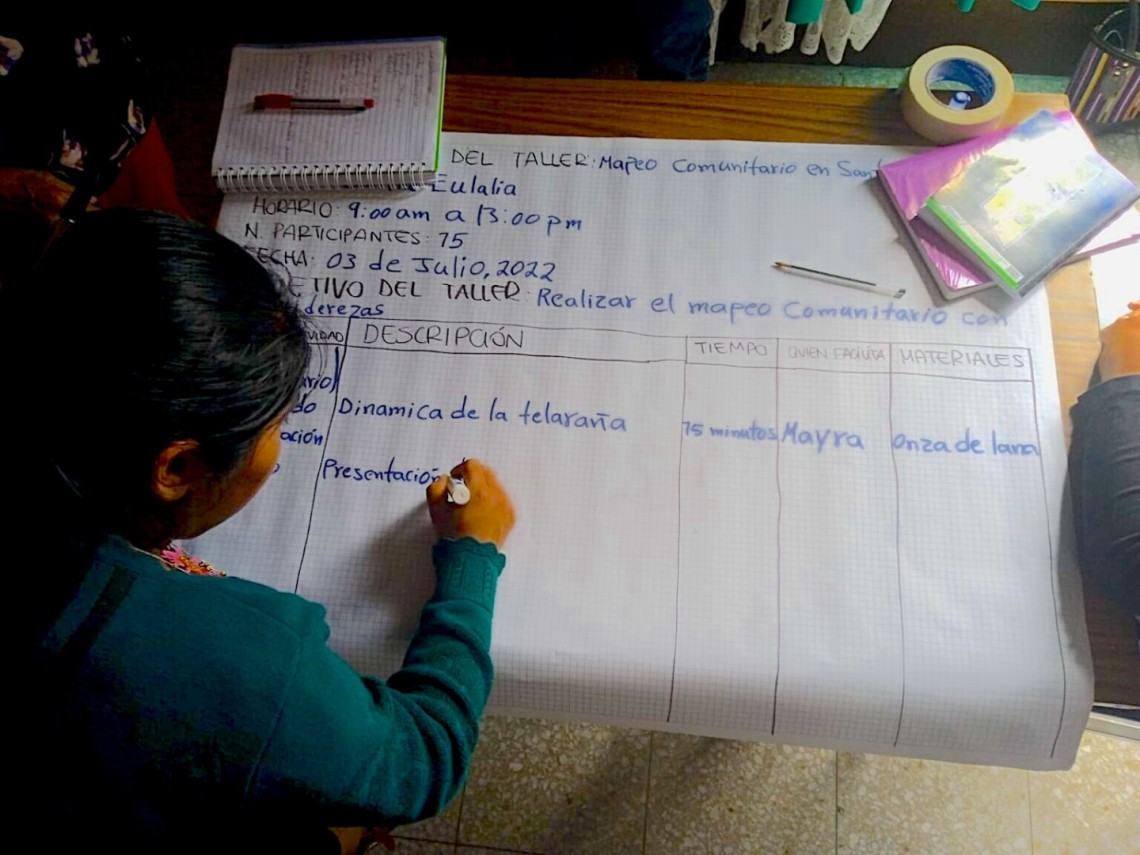
Workshop led by the Wuxhtaj Women’s Council during the first CLR on Corporate Capture, documenting hydroelectric-related human rights violations in Huehuetenango, Guatemala.

Over the past five years, CLR has grown into something much deeper than a research initiative. It has become infrastructure for movements, enabling communities to connect their struggles, build shared analysis, and shape their political strategies:

2020-2024 – CLR on Corporate Capture
Grassroots groups exposed how corporations undermine women’s rights to land, housing, and natural resources— dismantling the myth of “development.”

Explore >>

2023-2025 CLR on Loss and Damage
Communities directly affected by climate change redefined loss and damage beyond narrow economic metrics, naming cultural, territorial and social losses erased from official frameworks.

Explore >>

2025-2027 Feminist Participatory Action Research (FPAR) on care-based economies
Organizations and movements across the globe are co-creating evidence and narratives that advance care-centered economies in response to climate and debt crises.

Explore >>


When local research processes are intentionally linked, impact multiplies. As Tom Weerachat, Deputy Director at the International Accountability Project and member of the CLR Hub Advisory Group, notes: “The impact grows when local research processes are intentionally linked through collective learning, shared methods, and reflection.” He reminds us that even amid repression and shrinking civic space, members continue to organize, document injustices, and imagine different futures together. Research is resistance:

“This collective creativity is transformative—it’s about shaping the world we dream of and building bridges of solidarity beyond our immediate struggles.” 

Loss and Damage from the Frontlines

What does “Loss and Damage” mean when communities define it? Across the globe, communities documented climate harm on their own terms — and lifted up the resistance emerging from the frontlines.  

Insights from the CLR on Loss and Damage:

México

Comités de Cuenca Río Sonora, based in the Sonora Desert, Mexico, report that climate change and the 2014 Buenavista del Cobre mine spill continue to deepen drought and water inequities: mining controls 57% of water rights, aquifers are overexploited, and toxic metals persist in river sediments a decade later. Communities report over 20 billion pesos in economic losses, with no adequate remediation.

Read more
Mongolia

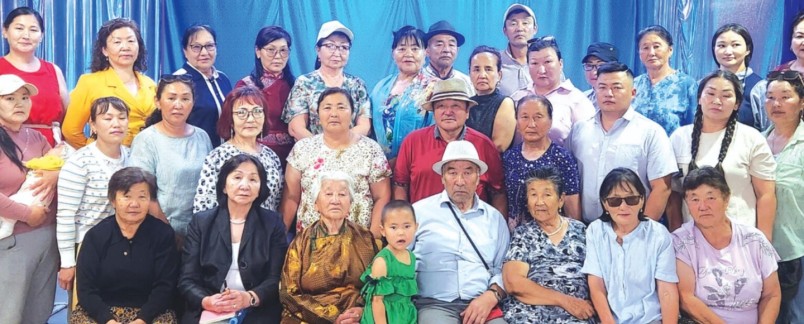
Centre for Human Rights and Development (CHRD) shares findings from research, showing that the 2024 extreme winters (zud) and floods caused extensive livestock losses, destroyed crops, and wiped out income sources. Many families also remain unaware of how to access assistance.

Read more
Kenya

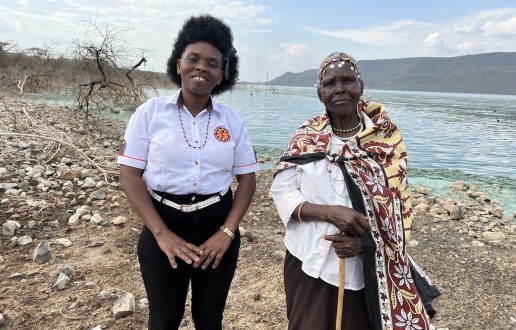
Endorois Indigenous Women Empowerment Network (EIWEN), based in the Lake Bogoria, reports that rising lake levels have led to the loss of over 3,000 acres of farmland and grazing land, the displacement of 418 households, water contamination, and the destruction of sacred sites and medicinal plants.

Read more
Colombia

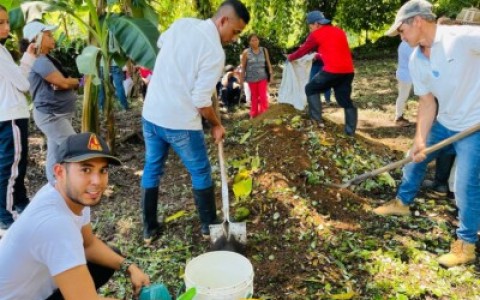
Comité Ambiental en Defensa de la Vida, based in Tolima, documents deforestation, water depletion and contamination, biodiversity decline, food insecurity, and profound cultural and spiritual losses linked to climate change and extractive activities.

Read More
Zimbabwe

Chimanimani Land and Environment Defenders report that years after Cyclone Idai, hundreds of missing people remain unrecognized, communities face threats of forced displacement, traditional leadership has been sidelined, and environmental degradation continues.

Read More
 

This research makes clear that the climate crisis is not accidental. It is tied to extractivism, corporate power, and colonial histories, impacting marginalized communities. Loss is not only financial. It includes ancestral knowledge, territory, culture, livelihood, and care.

Watch the Loss and Damage People Declaration on Instagram

 
Care as Our Political Horizon: Feminist Participatory Action Research (FPAR)
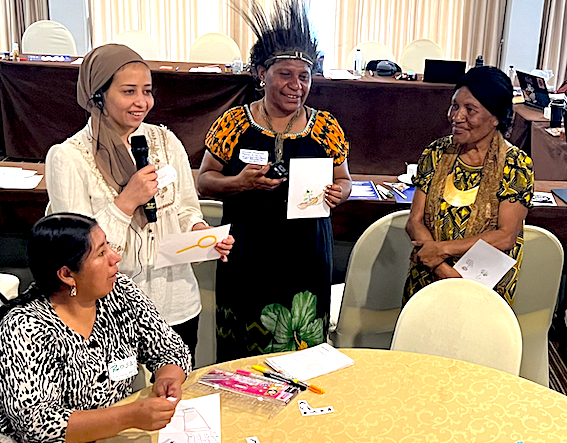
A group of participants in the Feminist Participatory Action Research session discusses how to center care in their research designs and advocacy strategies.

If Loss and Damage helped us name what the system destroys, FPAR asks what we are building in its place. Movement-rooted research teams across Papua New Guinea, Palestine, Tanzania, Argentina, and Egypt are advancing Feminist Participatory Action Research (FPAR) to help reshape our economic systems toward regenerative, care-centered futures aligned with ESCR-Net’s Social Pact on Care. Participants are examining how communities sustain life and organize care under climate crisis, debt injustice, and structural violence — and how existing practices of care, solidarity, and ancestral knowledge are already bringing other worlds into being.

In a world shaped by intersecting crises and a dominant economic model rooted in extraction, patriarchy, and systemic racism, FPAR is not simply a methodology. It is a political commitment.

For Thato Masiangoako, researcher at the Socio-Economic Rights Institute of South Africa and member of the CLR Hub Advisory Group, this work speaks directly to our political moment: “In this moment of increasing unrest and precarity, people and communities are not just sustained by unpaid care work — that same work becomes the first line of defence when social amenities and cohesion come under attack.”

She reminds us that this often invisibilized labor “makes up the very backbone of our communities and broader societies.” FPAR creates space “to deepen our understanding of these means of organising and resisting at the local level,”- and to amplify their political significance across the Network.

Learn more about the FPAR

The FPAR process began with a workshop, Reclaiming Our Stories, Shaping Our Futures, held in Bangkok in June 2025, which brought together participants from the CLR on Loss and Damage and the new FPAR cohort. Through body mapping, embroidery, storytelling, and power-mapping exercises, communities shared lived experience, ancestral knowledge, and political strategies—moving beyond documenting harm to collectively shaping narratives and demands for justice, care, and dignified futures.

Learn more about the FPAR workshop


To receive more information about the CLR Hub, contact Vanessa Coria, Community Research Coordinator, at vcoria@escr-net.org


Subscribe to our Newsletters  

Privacy Policy

 Facebook  X / Twitter  Web  Instagram