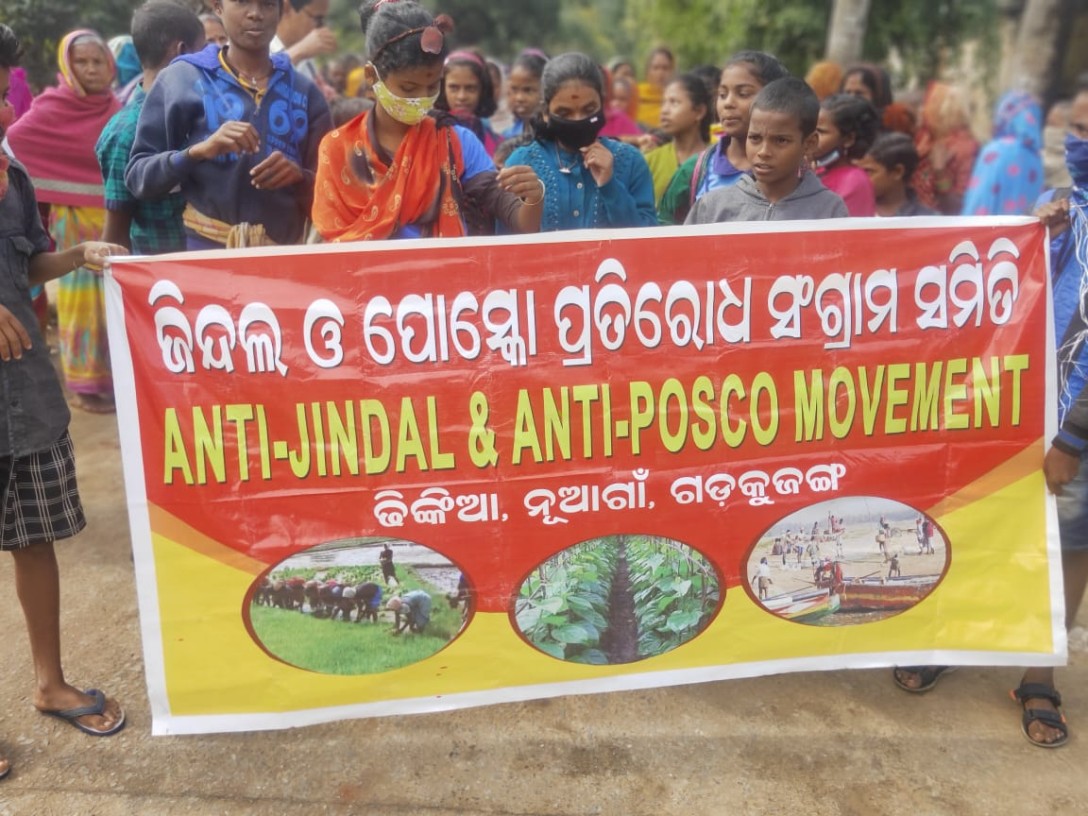
For more than two decades, communities in Odisha, India, have resisted steel projects that threaten their lands, livelihoods, forests, and environment. The struggle began in 2005, when South Korean steel giant POSCO announced plans for a massive steel plant and port complex that would have displaced thousands of people and devastated a region sustained by small-scale farming, fishing, and betel vine cultivation.
After years of community resistance, legal challenges, and international solidarity, POSCO withdrew in 2017. Yet the struggle continues. Much of the land earmarked for the project was later transferred to JSW Steel, and communities in villages such as Dhinkia continue to raise concerns about displacement, environmental harms, violations of forest rights, and restrictions on their right to protest. As recently as May 2026, villagers staged demonstrations alleging forced land acquisition, the disregard of Gram Sabha (village assembly) decisions required under India's forest rights framework, and police repression linked to the project.
On the international stage, in 2025, a group of UN human rights experts also warned that the JSW project could violate international human rights standards and called on authorities to ensure that the rights of affected communities are fully respected. Earlier, in 2022, ESCR-Net and more than 130 organizations and movements joined affected communities in calling on authorities to halt forced evictions, land grabbing, and the repression of villagers defending their rights.
The Odisha case exposes a core challenge the UN Treaty seeks to address: while corporations, investors, and supply chains operate across borders, affected communities often face enormous barriers in accessing justice, remedy, and accountability. As negotiations enter a decisive phase, the experience of Odisha is a reminder of what is at stake for communities confronting corporate power around the world.
→ READ MORE:
|